

Key Takeaways
- Waterproofing spray equipment must be matched to the material, not just the size of the job.
- Many waterproofing materials require specialized components such as compatible outlet valves, suction assemblies, and material handling systems to help maintain flow consistency and reliable spray performance.
- Different waterproofing applications—including below-grade, blindside, full tanking, and podium deck projects—have unique equipment requirements.
- Standard paint or coating sprayers may not be suitable for certain waterproofing materials because they may not be configured for the material's viscosity, handling requirements, or delivery characteristics.
- The Bolair BWPX 6900 is specifically modified for NaturaSeal waterproofing materials, featuring a redesigned outlet valve and bulk suction system.
- Selecting the correct waterproofing spray equipment improves material flow, curing consistency, productivity, and long-term waterproofing performance.
- Co-spray guns keep materials separate through the gun and apply them simultaneously at the point of application, making them useful for compatible materials that must remain separate until they reach the substrate.When a Co-Spray gun is required, the spray equipment is not considered Two-component as the base material and the salt material are applied to the Co-Spray gun from two separate sprayers, even though the Co-Spray gun is a special two component spray gun.
Table of Contents
- Why Waterproofing Spraying Requires the Right Equipment
- Start With the Material, Not Just the Job Size
- Where Waterproofing Spray Equipment Is Used
- Bolair BWPX 6900 Waterproofing Sprayer: Why Customization Matters
- What Is a Co-Spray Gun?
- Bolair DuoX25: Where It Fits in the Equipment Selection Process
- Equipment Components That Matter for Waterproofing Materials
- Why Standard Spray Equipment May Not Be Enough
- Common Mistakes Contractors Make
- How Equipment Choice Changes by Waterproofing Scenario
- How Bolair Helps Contractors Set Up Waterproofing Spray Equipment
- FAQ About Waterproofing Spray Equipment
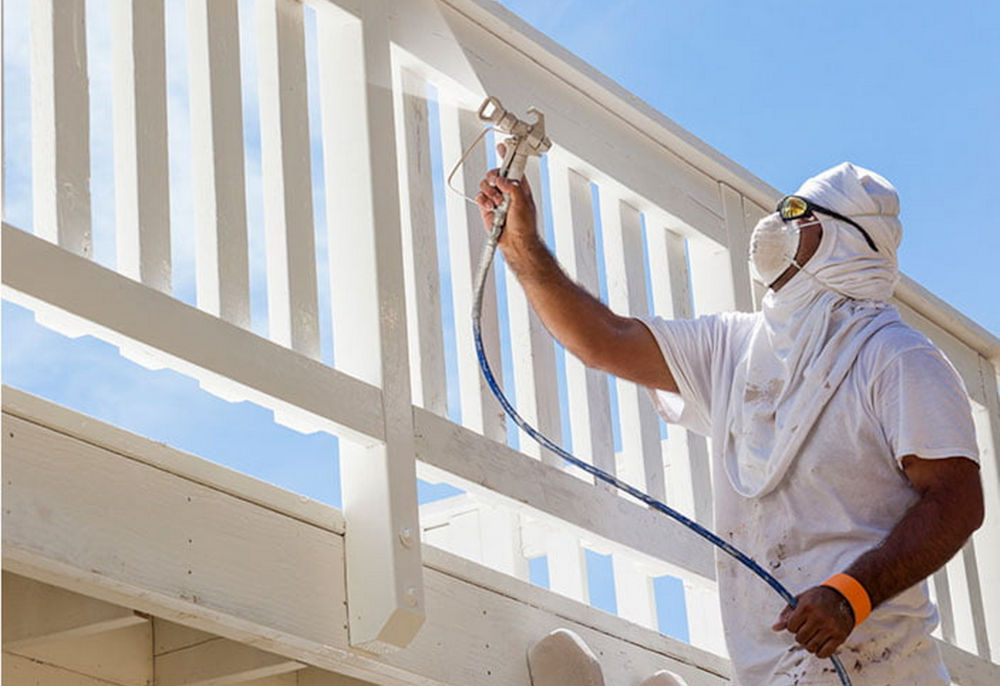
Contractors adding waterproofing spray equipment to their arsenal of tools need to make sure the system is matched to the material and application. Below-grade, blindside, full tanking, and podium deck waterproofing applications may require equipment that is configured specifically for the waterproofing material being used, including proper suction assemblies and compatible material-handling components. One option designed specifically for NaturaSeal waterproofing applications is the Bolair BWPX 6900.
Why Waterproofing Spraying Requires the Right Equipment
Many waterproofing materials have different handling, flow, viscosity, and application requirements than conventional paints or coatings. Because of these differences, equipment selection should always be matched to the material manufacturer's recommendations.
Waterproofing materials may have different requirements based on their formulation, application method, jobsite conditions, and delivery requirements.
Start With the Material, Not Just the Job Size
While most contractors jump to job size when deciding which equipment is right for them, material matters most. It’s crucial that you pick a spray machine that’s compatible with the product you’re using.
If you assume that all types of spray equipment will work with waterproofing materials, you’ll be left with some serious problems at the jobsite, including:
- Clogging: Certain waterproofing materials require compatible material-handling components. Using incompatible equipment can contribute to material flow problems, clogs, inconsistent delivery, or excessive wear on the system.
- Inconsistent Spray: Incompatible spray equipment can result in inconsistent material delivery, uneven spray patterns, or inconsistent membrane thickness.
- Improper Curing: Improper application can affect membrane performance, adhesion, coverage consistency, and overall waterproofing effectiveness.
Where Waterproofing Spray Equipment Is Used
So what types of jobs use waterproofing spray equipment? Here are some of the most common applications:
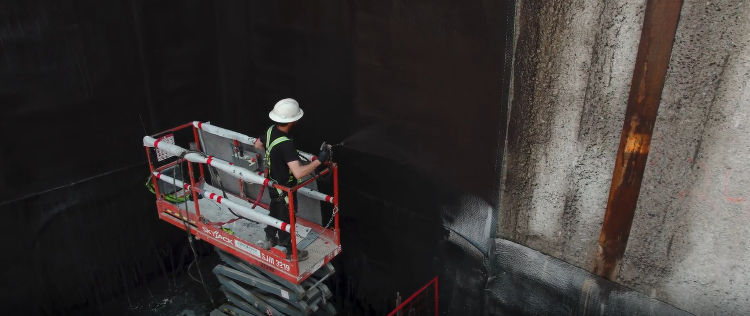
- Below-grade waterproofing spraying that happens beneath ground level, such as around foundations.
- Blindside waterproofing that occurs in certain applications before structural concrete is poured.
- Open-cut foundation work, such as when the area around a foundation is excavated so that it can be waterproofed in retrofit format.
- Full tanking applications when the entire foundation is encased in a waterproof membrane for use in high-moisture content soils.
- Podium deck waterproofing for decks that are installed over high-traffic areas.
- Concrete waterproofing for foundations, slabs, or any other material needing weather resistance.
Below-Grade Waterproofing Applications
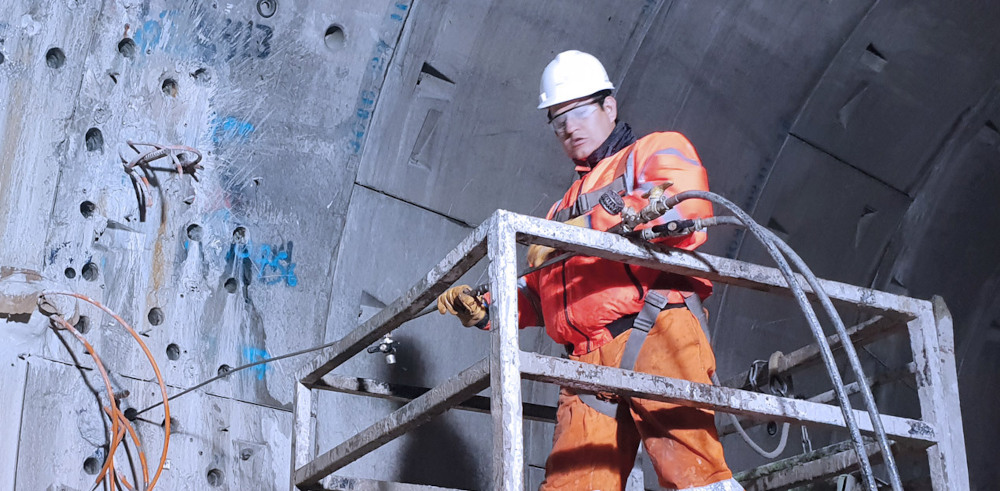
Below-grade waterproofing projects often present access, hose routing, material delivery, and application consistency challenges. Equipment reliability and compatibility become especially important in these environments.
Podium Deck and Full Tanking Applications
These applications often involve large continuous surfaces where consistent material delivery and uniform membrane coverage are critical.
Bolair BWPX 6900 Waterproofing Sprayer: Why Customization Matters
The Bolair BWPX 6900 is a modified version of waterproofing spray equipment customized to handle NaturaSeal and other waterproofing applications. The package is configured specifically for NaturaSeal and other waterproofing applications and includes modifications intended to improve material delivery and handling compared to a standard coating setup. It features:
- A customized outlet valve assembly designed for NaturaSeal applications.
- A 55-gallon suction configuration replacing the standard 5-gallon setup.
What Is a Co-Spray Gun?
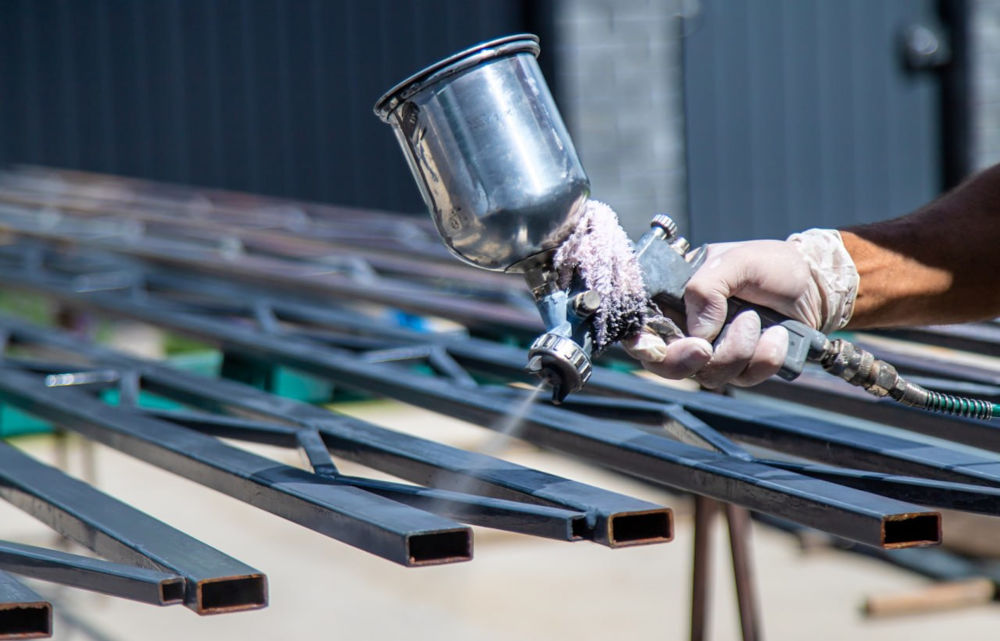
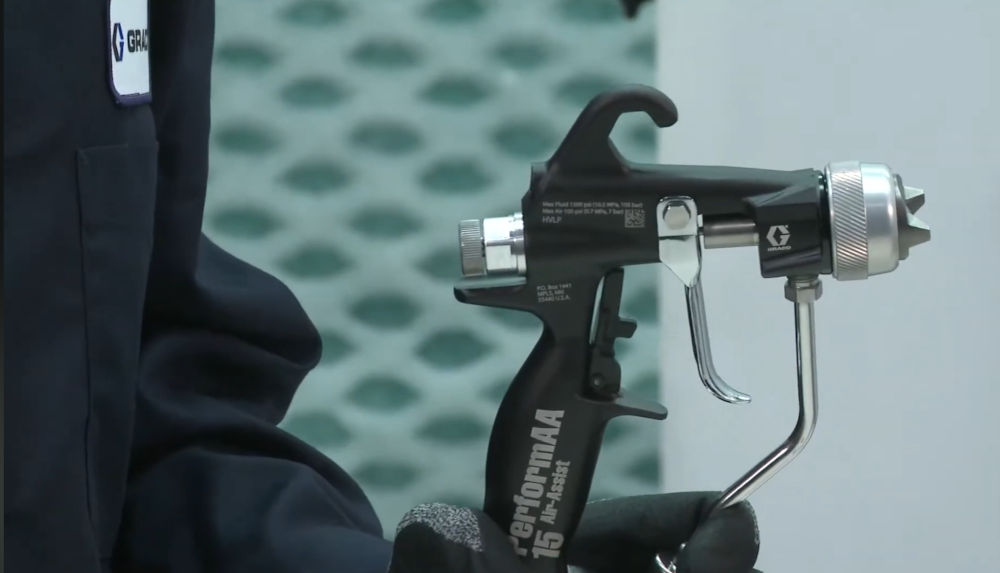
A co-spray gun is a spray gun designed to apply two material streams at the same time while keeping them separate until the point of application. Some two-component materials are mixed before spraying, while others are proportioned through equipment and mixed through a manifold, static mixer, spray gun, or at the substrate. Co-spray guns are useful when the product is designed for simultaneous application at the surface.A co-spray gun is a type of spray gun that’s used with two-component materials. While some two-component materials require mixing at the proportioner or hopper, others require mixing within the spray gun, right before they’re applied. Co-spray guns provide this functionality and spray material simultaneously on the spray surface. The benefits of them include:
- Reduced Waste: Because the components are applied only as needed, co-spray systems can help reduce waste from unused mixed material, especially with products that have limited working time.
- Good For Short Pot Lives: Co-spray guns can be useful for compatible fast-curing or limited-pot-life materials because the components remain separate until they are applied at the point of application.
- Faster Production: Simultaneous application can reduce manual mixing steps and support more consistent production when the material and equipment are properly matched.
Bolair DuoX25: Where It Fits in the Equipment Selection Process
If the material you’re using is designed for simultaneous point-of-application delivery, you need a spray gun that keeps the components separate until they are applied at the substrate.
The Bolair DuoX25 is a dual-component co-spray gun designed for simultaneous application of two-part sealers and waterproofing coatings. It uses separate material paths so compatible components can be applied together at the point of application, helping sup port consistent distribution and coverage on the substrate.
The DuoX25 is designed for compatible dual-component, co-spray sealers and waterproofing coatings, including select NaturaSeal applications.
Equipment Components That Matter for Waterproofing Materials
Why do the Bolair BWPX 6900 improvements matter? Waterproofing spray equipment should be configured around the waterproofing material's handling requirements, flow characteristics, and application method.
Outlet valve configuration and suction design can influence flow consistency, material delivery, and overall spray performance. Matching these components to the waterproofing material helps support reliable operation in field conditions.
Why Standard Spray Equipment May Not Be Enough
Standard spray equipment may not be configured for certain waterproofing materials or waterproofing workflows. The problem is not capacity; it’s material compatibility, outlet valves, and suction setup. Using equipment that is not compatible with the material may result in inconsistent spray performance, material-handling issues, downtime, or reduced application quality.
Common Mistakes Contractors Make
When looking for a waterproofing sprayer for concrete, contractors commonly make these mistakes:
- They choose a generic, all-purpose machine that isn’t designed to handle emulsions.
- They ignore material requirements and only look at output requirements.
- They assume regular paint sprayers work for waterproofing.
- They underestimate the intensity of emulsion handling and the effect it has on a system’s components.
- They don’t confirm compatibility before starting a job.
How Equipment Choice Changes by Waterproofing Scenario
| Application | Equipment Consideration | Why It Matters |
|---|---|---|
| Below-grade | Needs usable, reliable spray gear for tight access | Basement and foundation work is hard to reach, so delivery consistency matters. |
| Blindside | Needs pre-pour spray setup | The membrane goes in before concrete, so the rig has to apply cleanly and correctly the first time. |
| Open-cut | Needs standard but emulsion-ready spray equipment | You have access to the foundation, but the material still has to flow and bond properly. |
| Full tanking | Needs steady feed and compatible components | Large wrapped areas demand continuous spray without clogging or pressure swings. |
| Podium deck | Needs even output over broad surfaces | Decks need uniform coverage, especially over high-traffic areas. |
| NaturaSeal | Needs a spray package configured for NaturaSeal applications. | Material handling, suction configuration, and accessory selection should match NaturaSeal application requirements. |
How Bolair Helps Contractors Set Up Waterproofing Spray Equipment
Bolair Fluid Handling is proud to be a trusted consultant in waterproofing and NaturaSeal spray equipment. We can help contractors choose the right machine, components, and configuration for their jobsite needs. The Bolair BWPX 6900 is a waterproofing package customized for NaturaSeal and other waterproofing applications and can be configured as part of a complete spray solution.
Whether you’re looking for waterproofing equipment, protective coating equipment, spray foam, or any other fluid handling systems, we’re here to help. Contact us today to begin discussing your project’s needs.
FAQ About Waterproofing Spray Equipment
What is waterproofing spray equipment?
Waterproofing spray equipment is designed to apply waterproofing membranes and emulsions used on foundations, podium decks, blindside walls, and other moisture protection applications. These systems are designed for waterproofing materials and applications that may require different handling characteristics than conventional paint-spraying equipment.
Why can't I use a standard paint sprayer for waterproofing materials?
Many waterproofing products have material-handling requirements that differ from conventional paint coatings.
What is below-grade waterproofing spray equipment used for?
Below-grade waterproofing equipment is commonly used to apply waterproofing membranes to foundations, retaining walls, basements, and other structures located below ground level where moisture protection is critical.
What makes the Bolair BWPX 6900 different from a standard sprayer?
The Bolair BWPX 6900 is modified specifically for NaturaSeal waterproofing applications. It features a customized outlet valve assembly, a 55-gallon suction configuration, compatibility with Bolair's co-spray package, and a package configuration designed specifically for NaturaSeal and other waterproofing applications.
What is a co-spray gun?
A co-spray gun applies two material streams simultaneously while keeping them separate until the point of application. This can help reduce waste and improve consistency for compatible materials designed for point-of-application delivery.
Why is the Bolair DuoX25 used for waterproofing applications?
The Bolair DuoX25 is designed for dual-component co-spray sealers and waterproofing coatings where compatible components are applied simultaneously at the substrate. Bolair lists example uses with NaturaSeal waterproofing and air barrier materials, and surfaces such as concrete, stone, and metal.
What types of waterproofing projects require specialized spray equipment?
Specialized waterproofing equipment is commonly used for below-grade foundations, blindside waterproofing, open-cut foundation repairs, full tanking systems, podium decks, and large concrete waterproofing projects.
Why is material compatibility more important than machine size?
Material compatibility is often more important than raw machine size because the spray system still needs to match the waterproofing product's handling and application requirements.
What are the most common mistakes contractors make when selecting waterproofing equipment?
Common mistakes include using general-purpose sprayers, focusing only on production output, ignoring material compatibility, underestimating emulsion handling requirements, and failing to verify equipment specifications before starting a project.
How do I choose the right waterproofing spray equipment?
Start by reviewing the waterproofing material requirements, then consider the application type, project size, jobsite conditions, and equipment compatibility. Consulting with an equipment specialist can help ensure the spray system matches both the material and the project.
Please complete your information below to login.
Sign In
Create New Account