


When shopping for a contractor spray system, most companies assume that the larger and more expensive the equipment is, the more useful it is. However, this isn’t always the case. There are a range of factors that need to be considered, whether you’re looking for spray equipment for small jobs or high volume spray equipment. The material you’re spraying, the size of the job, and how much the business intends to use the equipment all play a critical role in a purchase. Figuring out where you stand is the first step you need to take.
Key Takeaways
- Bigger spray equipment is not always better; the right system depends on job size, application type, material, and frequency of use.
- Spray equipment for small jobs is usually better when portability, fast setup, and lower upfront cost matter most.
- High-volume spray equipment often makes more sense for daily use, larger jobs, higher output requirements, heavier coatings, and production-focused workflows.
- Contractors should evaluate whether spraying is their main business or an added service before investing in a larger system.
- Application type can change the required setup, including pump choice, pressure needs, hose configuration, spray gun, tip size, accessories, and material handling requirements.
- Downtime tolerance is a major factor: high-volume teams often need more durable, serviceable equipment with stronger support and parts availability.
Table of Contents
- Why Job Size Matters When Choosing Spray Equipment
- Questions to Ask Before Choosing a Spray System
- When Smaller Spray Equipment May Be Enough
- When High-Volume Spray Equipment Makes More Sense
- How Application Type Changes Equipment Needs
- Portability vs. Production Capacity
- Downtime Tolerance: Why Volume Changes the Risk
- Small Job vs. High-Volume Spray Equipment Comparison
- Final Thoughts: Choosing the Right Spray Equipment for Your Workload
- Questions Bolair Can Help You Answer Before You Buy
- FAQ About Choosing Spray Equipment for Small Jobs and High-Volume Work
Why Job Size Matters When Choosing Spray Equipment
Job size is a key factor to consider when purchasing equipment. Low volume and high volume jobs differ dramatically in their equipment needs. Spray equipment for small jobs prioritizes portability, setup speed, and a lower upfront investment. Larger jobs often require equipment with higher flow capacity, support for larger tip sizes, longer hose runs, stronger duty cycles, and better serviceability.
The most important factor to consider when selecting the spray equipment is the material itself that needs to be sprayed. Once the material parameters are determined, then the equipment recommendations can occur. The size of the job will then be considered.
Most contractors fall somewhere in the middle, but it’s important to understand the scope of the work you do. Someone who’s spraying interior finishing or texture of a single-family home may need a very different setup than a contractor applying protective coatings, polyurea, or 100% solids epoxy on large industrial jobs.
Questions to Ask Before Choosing a Spray System
Many contractors don't realize they've outgrown - or overbought - their equipment until months into using it. Asking the right questions upfront avoids that. Here's what Bolair walks through with every new client before recommending a system:
What Application Are You Doing?
There are many kinds of spray applications, each with different equipment needs. Spray foam, painting, fine finishing, and protective coatings all require unique machines and setups, so it’s important to know what type of job you commonly do. Spray equipment sizing varies by:
- Pump Choice
- Pressure Needs
- Hose Setup
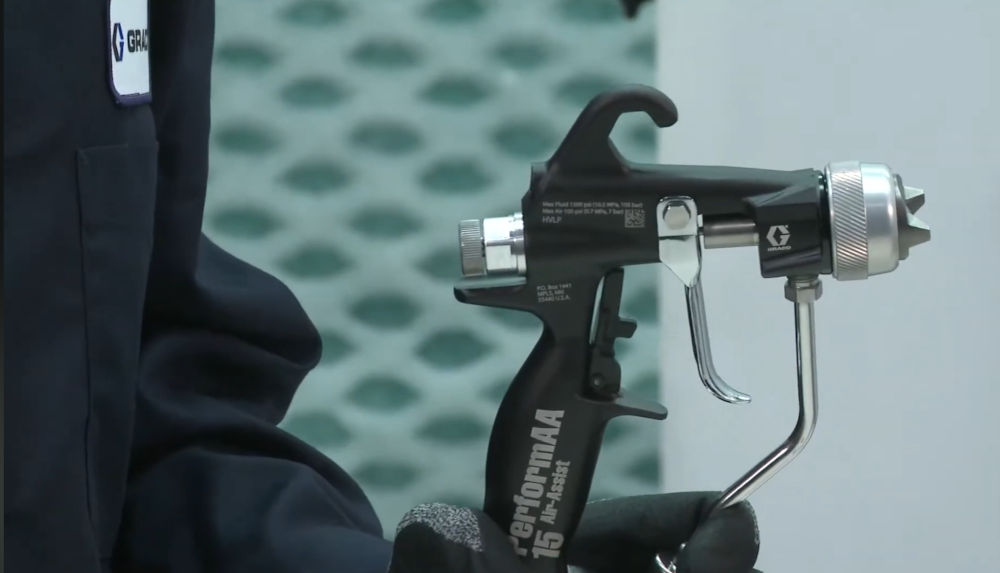
- Spray Gun
- Tip Size
- Accessories
- Material being used
How Big Are Your Jobs?
The larger your jobs are, the more output you’ll need. Small touch-up jobs and occasional projects can get by with a smaller, lower-powered system. However, once you start crossing into the territory of midsize contractor work or high-volume production, too small of a machine can limit output. High volume spray equipment is designed with larger pumps, wider hose capacity, and more robust drive systems so the machine doesn't become the limiting factor once job size scales up.
How Frequently Will You Be on a Job Site?
Contractors who use their system every day will have different needs than someone who uses theirs once a month. Frequent use also changes the math on cost-per-job: a system used daily spreads its upfront cost across far more work than one used occasionally, which can make a higher initial price easier to justify. Some smaller or entry-level systems may have fewer production features or service-focused components, but they can still be the better value for occasional use.
Is Spraying Your Main Business or an Added Service?
The scope of your business has a large impact on what type of contractor spray system you purchase. If your core services are not spray-related and you only need to provide them as an add-on, an entry-level machine may be the most practical investment. However, If spraying is the core of the business, it is often worth investing in a system with the output, reliability, serviceability, and feature set needed for repeated production work.
When Smaller Spray Equipment May Be Enough
Smaller spray equipment is not only for beginners or low-output businesses. It can also make sense for experienced contractors working in tight spaces, doing touch-ups, testing a new service, or handling jobs where setup speed matters more than maximum flow. There are plenty of situations when a more affordable, smaller-sized unit is practical, including:
- Tight Spaces: Small units are easier to move through doorways, up stairs, and around finished spaces without needing extra labor or specialized handling equipment.
- Lower Material Volume: You can have a large operation that only needs small amounts of output during each application. An oversized unit may be overkill.
- Testing: If you’re testing the waters of a new service, you can purchase a smaller unit before committing to a larger one.
- Speed and Efficiency: In some cases, speed may be more important than output. Smaller units are easier to set up and transport, so they may be a good option here.
When High-Volume Spray Equipment Makes More Sense
For some applications, high-volume spray equipment becomes the practical choice, especially when the job requires daily use, larger coverage areas, higher output, or reduced downtime risk. If you frequently do large coverage projects, a smaller machine won’t keep up. Operations that spray daily will also benefit most from higher production spray equipment. Larger crews working off a single system also benefit from steadier output, since inconsistent flow - and in plural component applications, ratio issues can create bottlenecks that ripple through the rest of the crew's workflow.
How Application Type Changes Equipment Needs
Certain types of applications simply need different types of equipment. For example, spray foam operations will require a contractor spray system with a proportioner, heated hose, transfer pumps, and material temperature control. Higher-end spray foam systems may also include advanced features such as ratio monitoring, independent hose temperature control, and connected system diagnostics. Painting and finishing will need different pressure control mechanisms and spray gun/tip setups. Protective coating operations may require high-pressure, heated durable equipment designed for materials such as polyurea, urethanes, 100% solids epoxies, and other medium- to high-solids coatings.
Portability vs. Production Capacity
Spray equipment sizing can be dependent on the environment in which the work is done. For instance, smaller jobs often benefit from portability more than they do production output. It may be more profitable to have a machine that can be quickly broken down and set up again, rather than something that’s just more powerful. Other job sites may benefit more from a larger or more capable system, even if it requires more planning to transport, stage, and set up.
Downtime Tolerance: Why Volume Changes the Risk
Downtime is inconvenient for all jobs, but for high-production teams, downtime directly results in lost profit. For high-production work, it can be worthwhile to choose equipment with enough capacity, tip support, filtration, serviceability, and duty cycle for the application. Oversizing alone does not prevent clogging; proper material preparation, filtration, tip selection, pressure setup, and maintenance still matter. Professional and production-focused systems often offer stronger serviceability, parts support, and manufacturer/distributor support, which becomes more important as downtime risk increases.
Small Job vs. High-Volume Spray Equipment Comparison
| Contractor Situation | Better Equipment Direction | Why |
|---|---|---|
| Occasional small paint or finishing jobs | Smaller portable setup, or spray equipment for small jobs | Easy to move, simpler to set up, and enough output for light use without overbuying. |
| Spraying as an added service | Scalable entry-level or mid-range contractor spray system | Gives room to grow while still handling a mix of jobs without major upfront complexity. |
| Daily finishing, cabinetry, or millwork | More controlled fine-finish setup | Better atomization and pattern control help deliver a smoother, higher-quality finish. |
| Spray foam proportioner matched to job volume, from entry-level to high-production. | Higher-output spray foam equipment | Foam work usually needs dedicated output, consistency, and durability for frequent use. |
| Protective coatings on larger jobs | Production-focused system | Built for high-pressure application, demanding jobsite conditions, and coatings such as polyurea, urethanes, 100% solids epoxies, and other medium- to high-solids materials. |
| High-volume production | Higher-capacity equipment with stronger output and support, or high volume spray equipment | Best for continuous use, larger crews, and jobs where uptime and throughput matter most. |
| Repeat commercial work with a focus on throughput | Production spray equipment | Helps maintain speed, consistency, and reliability across many jobs. |
Final Thoughts: Choosing the Right Spray Equipment for Your Workload
Getting this decision right the first time matters more than it might seem. Underpowered equipment can bottleneck production and force an early, costly upgrade, while an oversized system that never runs at capacity ties up capital that could go toward growing the business elsewhere. The goal isn't to predict every future job with certainty - it's to select equipment that fits current workloads while leaving room for future growth..
There's rarely a single "right" answer on paper - the same job can be handled two or three different ways depending on how the business plans to grow, what budget is available now versus in a year, and how much risk the team is willing to take on with a new system. That's usually where an outside perspective helps most.
Questions Bolair Can Help You Answer Before You Buy
Bolair Fluid Handling Systems is Canada’s leading supplier and consultant of spray equipment. Our professional team can help you find the appropriate contractor spray system by walking you through questions that help you determine your needs. We’ll review your application, material type, job size, job frequency, workflow, and future growth plans, and offer suggestions on affordable equipment that meets your job site requirements and budget.
Ready to get started? Contact one of our experts today to start discussing your next equipment purchase.
FAQ About Choosing Spray Equipment for Small Jobs and High-Volume Work
What is the best spray equipment for small jobs?
The best spray equipment for small jobs is usually a portable, lower-output system that is easy to move, quick to set up, and practical for light or occasional use. The exact choice depends on material type, surface size, finish expectation, tip size, sprayer compatibility, and frequency of use.
When do I need high-volume spray equipment?
High-volume spray equipment is usually needed when you handle large jobs, spray frequently, require consistent production output, use larger tip sizes, or apply heavier materials that require more capable pumps and pressure support.
Is bigger spray equipment always better?
No. Bigger equipment is not always better. Oversized systems can be more expensive, harder to transport, and unnecessary for small jobs or occasional spraying. The right system should match your workload, material type, and business model.
What questions should I ask before buying a contractor spray system?
Before buying a contractor spray system, ask what application you are doing, how large your jobs are, how often you will use the equipment, and whether spraying is your main business or an added service. Be sure to have your Product Data Sheet of the material you intend to spray ready to provide to a Bolair expert.
Can I use small spray equipment for commercial work?
Yes, small spray equipment can be used for commercial work if the job size, material volume, and output requirements are limited. However, frequent commercial spraying or larger projects may require a more durable, higher-output system.
Why does application type matter when choosing spray equipment?
Application type matters because spray foam, painting, fine finishing, and protective coatings can require different pressure levels, pumps, hoses, guns, tips, accessories, material feed systems, heat, and proportioning requirements.
A system that works well for one application may not perform well for another.
What is more important: portability or production capacity?
It depends on the job. Smaller jobs often benefit more from portability and fast setup, while high-volume jobs usually require stronger production capacity, durability, and consistent output.
How does downtime affect the equipment decision?
Downtime has a bigger impact on high-volume contractors because every delay can mean lost production, cancelled jobs, and reduced profit. For daily-use operations, more serviceable equipment with better parts availability is often worth the investment.
Please complete your information below to login.
Sign In
Create New Account