
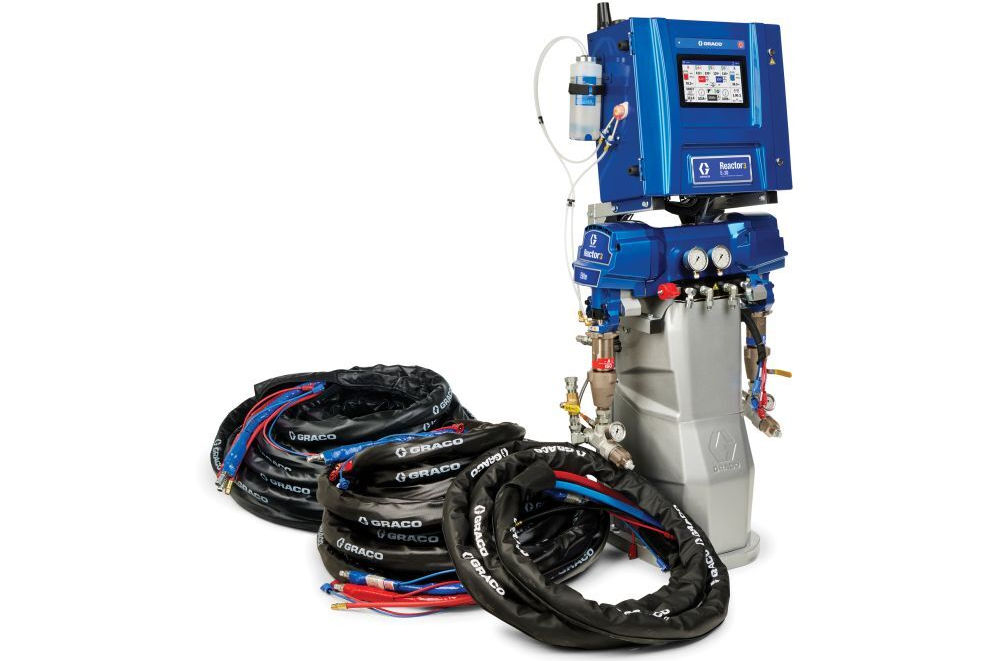

You can extend your heated hose length for spray foam, but not without limitations. Machine output, heated hose transformer size, spray equipment pressure loss, and heat capacity all affect the final coat. Exceeding recommended lengths can compromise quality by affecting spray patterns and adhesion if you are not aware and make the necessary adjustments.
Key Takeaways
- Consult with Bolair Fluid Handling before extending your heated hose length for spray foam equipment.
- Spray machine output and heated hose transformer size determine how much heated hose the system can support.
- Longer hose lengths beyond the recommended setup can take longer to heat.
- Exceeding system limits can result in pressure loss and heat instability.
- Setup changes may be needed before adding longer heated hoses.
Table of Contents
- Why Hose Length Matters in Spray Foam Applications
- How Machine Output and Heated Hose Transformer Size Affect Maximum Hose Length
- How Longer Hose Runs Affect Pressure
- How Longer Hose Runs Affect Heat
- Why Heat Matters for Spray Pattern and Adhesion
- When Longer Hose Runs Are Feasible
- Common Problems After Adding Too Much Hose
- Planning Checklist Before Extending Spray Hose Length
- How Bolair Helps Contractors Configure Hose Length Properly
- FAQ About Spray Foam Hose Length and Heated Hose Performance
Why Hose Length Matters in Spray Foam Applications
Spray foam hose length is an important consideration for all job sites. The longer a heated hose bundle is, the more flexibility the spray crew has. It improves efficiency by reducing the number of times the proportioners have to be relocated. However, you can’t simply install the longest hose bundle you can find and expect results to be unaffected.
How Machine Output and Heated Hose Transformer Size Affect Maximum Hose Length
The heated hose transformer is also a major factor. Larger-output machines typically come with larger heated hose transformers, allowing longer heated hose runs to heat more effectively. This is why maximum hose length is not based on hose length alone. It depends on the machine’s ability to maintain both pressure and heat across the full hose run.
Before extending your spray foam hose length, consult with Bolair Fluid Handling to confirm what your equipment can safely support. Our technical specialists can help review your machine capacity, heated hose transformer size, material requirements, and jobsite needs before changes are made. There’s no way around it, so contractors should not assume they can keep adding length without consequences.
The maximum heated hose lengths allowed are determined by the output of the machine as well as the size of the heated hose transformer. The more material a machine can push through its system per minute, the less it cools down by the time it reaches the spray gun. As foam machines output increases, so does the heated hose transformer. Therefore, the higher the machine’s output, the longer the hose length it can support.
How Longer Hose Runs Affect Pressure
The biggest issue with using a spray foam hose that’s too long is spray equipment pressure loss. Pumps are responsible for moving materials through the system at a set pressure, but all pumps have a maximum pressure.
If you increase the length of the hose, the weaker the pressure of the materials will be by the time they spray out of the spray gun. This directly affects output volume and spray quality.
How Longer Hose Runs Affect Heat
Heated hoses keep spray foam materials at the proper temperature while they travel from the proportioner to the spray gun. When a technician uses a longer heated hose length for spray foam, the spray foam hose heat takes longer to distribute across the entire run. If the hose is properly sized to the machine, this isn’t a problem, but it is something to be aware of. Technicians will need to ensure that they are waiting long enough before they start spraying.
Why Heat Matters for Spray Pattern and Adhesion
Without proper spray foam hose heat, you’re bound to get poor quality results. Heat affects the viscosity of the material, and when it’s too cold, the consistency and adhesion change. The result is poor atomization as the materials are released, creating an inconsistent or tight spray pattern. Additionally, the foam won’t expand fully or stick to the substrate as easily.
When Longer Hose Runs Are Feasible
Longer hose runs are fantastic when they’re planned strategically. If a contractor sticks to their manufacturer’s parameters, they are free to extend the hose length as much as allowed. However, maximum hose lengths assume specific outputs and pressures, so these need to be balanced alongside any hose length changes.
Common Problems After Adding Too Much Hose
- Pressure Loss: Spray equipment pressure loss is the biggest issue. It’s observed as weak or thin output.
- Slow Heat-Up Time: Longer hoses take longer to heat up, reducing efficiency.
- Unstable Material Temperature: Inconsistent viscosities can cause a range of problems, from output to adhesion and curing.
- Poor Spray Pattern: Too long a hose run can result in an inconsistent fan pattern that’s unpredictable, thin, or thick in areas.
- Adhesion Problems: Material may drip or fall off substrate surfaces, failing to properly coat and cure.
- Longer Setup Time: There’s quite a bit of extra manual labor involved with long hose runs. It can add 15+ minutes to every jobsite set up just to get the hoses positioned.
- Reduced Productivity: Longer setup times and longer wait times for heating result in reduced productivity and profit.
Planning Checklist Before Extending Spray Hose Length
- Check your spray machine and verify the manufacturer and model.
- Find maximum hose length and output ratings in the manufacturer's specifications.
- Determine what material you’re spraying and its requirements.
- Consider your current length, desired length, and whether your equipment can support it.
- Adjust for temperature and pressure as required.
- Optimize your jobsite and power supply layout to ensure it’s as efficient as possible.
If you have any questions about spray foam heated hose lengths, the expert team at Bolair can provide helpful guidance.
How Bolair Helps Contractors Configure Hose Length Properly
Individual machine specifications can be tough to navigate. At Bolair, we’re experts on the unique requirements of top manufacturers like Graco, and we can help you determine if extended spray foam hose lengths are right for your team.
We’re a technical partner to Canadian contractors, helping them understand their machine capacities, hose packages, material requirements, and jobsite needs. Get started today and contact our experts.
FAQs
What is the maximum spray foam hose length?
It varies by manufacturer and model. For example, the Graco H-50, and H-XP3 machines generally boast the longest hose length, maxing out at around 420 feet. Contractors should always confirm the exact maximum hose length as stated in the manual for their speciific machine.
Can I add more heated hose to my spray foam machine?
Yes, you can extend the length of your spray foam heated hose as long as you follow manufacturer guidelines and respect material compatibility.
What happens if my hose is too long?
If your hose is too long, you can experience pressure loss, temperature loss, and inconsistent viscosities, resulting in poor quality spray foam and poor adhesion.
Does a longer hose cause pressure loss?
It can. If the hose is too long for the proportioner’s rated output, pressure can decrease too much over the length of the run.
Why does a longer heated hose take longer to warm up?
Longer hoses take longer to warm up because there is more material that has to be heated. Additionally, the extra length of the hose can experience more heat loss from the environment, which takes longer to stabilize.
Can a longer hose affect adhesion?
It can if the hose is too long for the system. If spray material loses heat over the course of the hose run, they could have difficulty sticking to the substrate and curing.
Please complete your information below to login.
Sign In
Create New Account