

Overall, as a general rule of thumb, replacing spray equipment should be considered when the cost of spray equipment repair is 50% or more of the replacement cost. Other factors that impact this decision include the availability of parts and the ease of repair. However, if the system requires repairs across multiple components, and it is difficult or time-consuming to find parts, it may still be worthwhile to invest in a replacement, even if costs are lower than this 50% threshold.
Key Takeaways
- Repair when the total repair cost is less than 50% of a new system.
- Repair when a system is new and parts can be quickly obtained.
- Consider when the cost of a repair approaches 50% or more of the cost of a new system.
- Replace if a system is old and parts are not available.
Table of Contents
- Common Signs Your Spray Equipment Needs Repair
- When Repair Is Usually the Better Option
- When Replacement Becomes the Smarter Investment
- Parts Availability and Discontinued Equipment
- Repair Cost vs. Replacement Cost: The 50% Rule
- How Downtime Changes the Repair-vs-Replace Decision
- Spray Foam Equipment Examples: When Replacement May Make More Sense
- Maintenance Habits That Help Delay Replacement
- How Bolair Helps Contractors Make the Right Call
- FAQ About Spray Equipment Repair and Replacement Decisions
Common Signs Your Spray Equipment Needs Repair
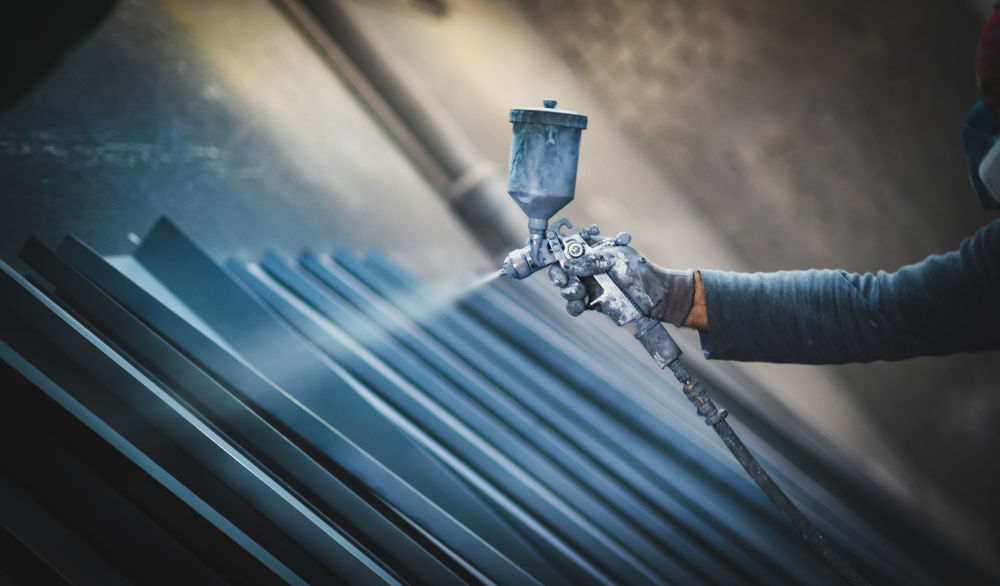
The signs of needing spray equipment repair start at the jobsite. Spray technicians might start noticing poor performance, such as inconsistent spray patterns, no material coming out of the spray gun, or poor pressure. All of this affects the final coat. These symptoms are often caused by issues such as worn pump components, clogged strainers or filters, hose restrictions, gun blockages, material delivery problems, or pressure imbalance.
The signs can also be apparent when the job is over and a technician is breaking down their equipment. During contractor spray equipment maintenance, a technician might notice clogged components or worn seals, indicating that a repair needs to be made.
When Repair Is Usually the Better Option
Many times, a simple repair is all that’s needed. If the repair is significantly lower than the cost of a replacement, it’s best to keep the equipment running. Another reason to invest in a repair is if the equipment is new. If the equipment is relatively new, repair is often the better option because the system may still have significant service life remaining — especially if the issue is isolated and the unit is otherwise in good condition.
In addition to these key reasons, you’ll also want to repair if:
- Only one part needs to be fixed.
- The parts are readily available, either online or at a local store.
- The repair doesn’t affect downtime.
- The system’s size is still adequate for the contractor’s work volume.
When Replacement Becomes the Smarter Investment
The decision to replace spray equipment should be a calculated one. For most contractors, protective coatings, spray foam systems and other equipment are significant investments, and the decision to purchase a new one should largely be driven by financial reasons. You don’t want to sink money into repairing a machine that will just break down again in a couple of months. You also don’t want unnecessary spray equipment downtime either. Generally, you’ll want to consider two things: the ease and practicality of the repair, and the cost in comparison to a replacement.
Parts Availability and Discontinued Equipment
Some types of repairs, even expensive ones, are very easy to complete. The parts might be readily available, whether that’s at an online or brick-and-mortar industrial supply store. When parts are quick to come by, there’s less downtime, making a spray equipment repair more logical.
However, if the parts are hard to find because the equipment is outdated or discontinued, it’s often more worthwhile to purchase a replacement. If critical parts are obsolete, backordered, or difficult to source, the added downtime may make replacement the better financial decision even when the repair itself seems affordable.
Repair Cost vs. Replacement Cost
As a rule of thumb, it makes more sense to replace spray equipment if the cost of repair is more than 50% of the cost of a new machine. You should look at your equipment as a long-term investment. Repeated major repairs can erode profitability over time. In many cases, a newer machine may reduce maintenance frequency, improve reliability, and lower downtime risk — but those benefits should be weighed against the full replacement cost, installation requirements, and expected utilization.
How Downtime Changes the Repair-vs-Replace Decision
Cost alone isn’t enough to justify replacement. Many times, spray equipment downtime is the most important consideration for a contractor. Downtime can lead to delayed schedules, missed production windows, lost revenue and customer dissatisfaction. Even if a repair is affordable, if it means you have to wait weeks to start working again, it might be a better financial decision to buy a new unit entirely.
Spray Foam Equipment Examples: When Replacement May Make More Sense
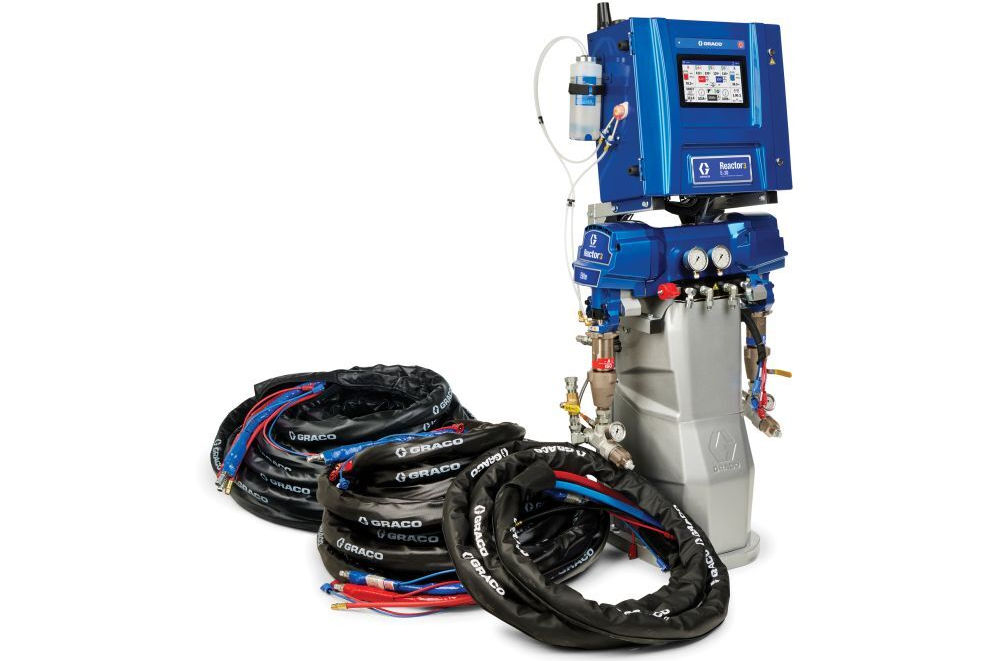
Spray foam equipment repairs are normally caused by a few common problems. If a spray technician accidentally leaves material in their system and forgets to flush it, it can cause catastrophic damage. For example, if material is left in a transfer pump and cures inside it, the damage can be severe enough that major components — or in some cases the complete pump — may need to be replaced rather than rebuilt.
Once material cures inside hoses, recovery is often impractical or uneconomical and new hoses are often the safest and most reliable solution.
Maintenance Habits That Help Delay Replacement
Regular maintenance is the best way to avoid expensive repairs and replacements. Technicians should follow the manufacturer’s daily shutdown, cleaning, inspection, and scheduled maintenance procedures, with more comprehensive service performed at the intervals recommended for their specific equipment.
Examples of contractor spray equipment maintenance include:
| Type of Maintenance | Purpose |
|---|---|
Flushing and Cleaning | Prevents spray material from curing inside transfer pumps and hoses, which could lead to expensive component replacements. |
Replacing Worn Parts Before Failure | Identifying worn seals, fittings, and hoses and replacing them before they become major problems helps avoid expensive repairs. |
Inspections and Pressure Checks | Ensures major components have consistent levels of performance, which helps spot catastrophic issues before they occur. |
How Bolair Helps Contractors Make the Right Call
Spray equipment repairs can get very complicated quickly. It’s helpful to be partnered with an equipment expert who knows how to identify problems and provide solutions.
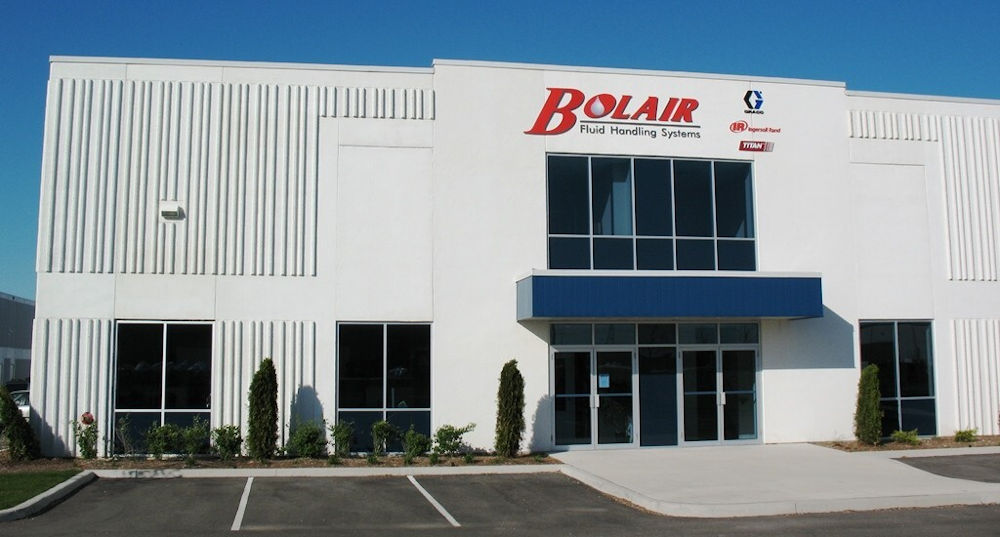
Bolair Fluid Handling Systems is Canada’s trusted expert for spray equipment parts, repairs, and sales. If you’re having trouble with your system, we can identify what’s wrong with it and provide a lasting repair with high-quality, readily available parts. If you’d benefit from replacing spray equipment instead, we can also help you find the right system for your needs. Contact us today to get started.
FAQs
When is spray equipment worth repairing?
Equipment is worth repairing when the cost is less than 50% of a new system, and there is no significant downtime associated with the repair. Additionally, new systems are almost always worth repairing, especially when they are covered under manufacturer warranties.
When should I replace spray equipment?
You should consider replacing equipment when the cost of a repair is 50% or more of the cost of a brand-new machine. It can also be advantageous to purchase a replacement if parts aren’t available and there will be too much downtime while the repair is completed.
Is it worth repairing old spray foam equipment?
Yes, older spray foam equipment can still be worth repairing if parts remain available, the repair is cost-effective, and the system still meets the contractor’s performance needs. However, age alone should not drive the decision — downtime risk, repair frequency, and component obsolescence matter just as much.Small repairs are expected as part of normal wear and tear.
What causes spray equipment downtime?
Technicians can experience significant downtime when their machine breaks down and needs repair. If parts are not readily available, they may have to wait days or weeks to obtain them.
What if parts are no longer available?
If parts are no longer available, it’s advisable to purchase a replacement system. Newer models have readily available parts, reducing the amount of downtime a technician could face if a repair is needed.
Can cured material damage spray hoses or pumps?
Yes. If material is not properly flushed and cures inside pumps or hoses, it can cause severe damage and may require extensive rebuilding or full component replacement.
Please complete your information below to login.
Sign In
Create New Account