
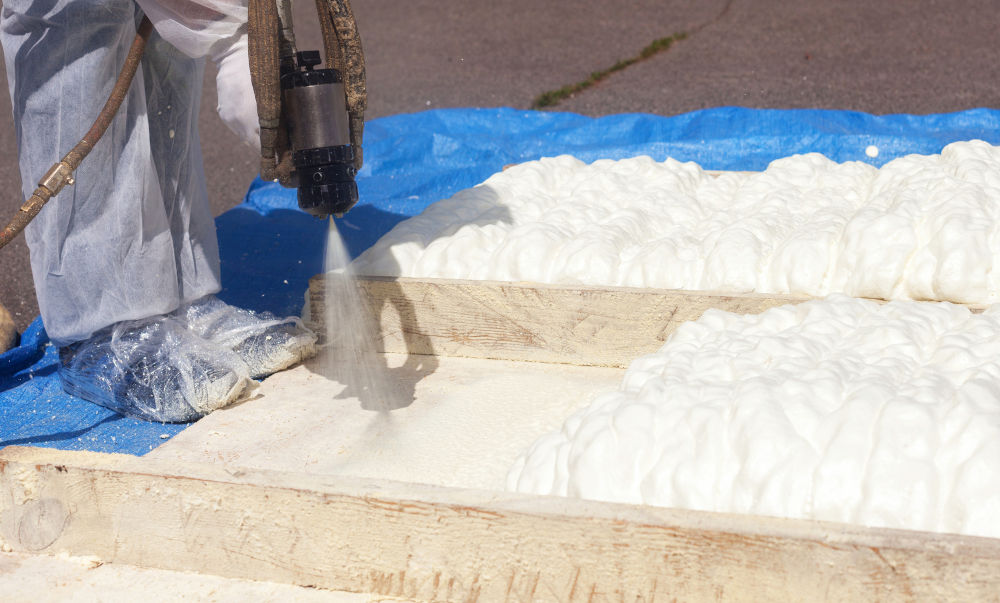

Key Takeaways
- Cold weather affects spray foam and protective coatings by changing material viscosity, pressure stability, adhesion, and cure performance.
- Many winter spraying issues are caused by equipment setup problems rather than the materials themselves.
- Consistent material conditioning from storage to spray gun is critical for reliable cold-weather performance.
- Heated hoses, pressure monitoring, and proper warm-up procedures help contractors maintain stable spray results in Canadian conditions.
- Successful winter spraying depends on controlling substrate temperature, preventing heat loss, and making field adjustments as conditions change.
Table of Contents:
- How Cold Weather Affects Spray Foam and Spray Coatings
- Managing Material Temperature: From Storage to Application
- Heated Hoses: Why You Need Them and How to Set Up
- Maintaining Pressure Stability in Fluctuating Outdoor Temperatures
- Cold Start Ups: Tips for Spray Foam Rigs
- Cold Weather Problems and How To Fix Them in the Field
- Winter Jobsite Checklist for Spray Applications
- Find Cold-Ready Spray Equipment at Bolair
- Frequently Asked Questions About Cold-Weather Spraying in Canada
Spray contractors in Canada have a unique challenge: cold weather. Spray materials are negatively affected by cold and fluctuating temperatures, so technicians must compensate by using specialized equipment and taking precautions. Failing to do this can result in a range of problems during application, including with viscosity, pressure stability, material adhesion, and cure time.
Most winter problems are caused by incorrect equipment configuration and setup, not the materials themselves. In this article, you’ll get a comprehensive understanding of how cold weather affects spraying and how you can set up your spray rig for success with help from Bolair.
How Cold Weather Affects Spray Foam and Spray Coatings
In many places around the world, spray technicians don’t have to worry about the temperature of the area they are spraying in . In Canada, it’s a crucial consideration that needs to be taken every time a rig is started. Cold temperatures can negatively affect both spray foam and protective coatings. This is less extreme in an indoor environment, but in outdoor environments, it can be an obstacle that needs to be dealt with:
- Substrate Adhesion: The National Research Council Canada has found that relatively low substrate temperatures can contribute to adhesive or cohesive failure at the foam–substrate interface, commonly seen as stud-line cracking/rifting, especially on wood or metal studs. Don’t spray if the substrate is at/near dew point. A common field rule is to ensure that ambient temperatures are at least ~5°F (≈3°C) above the dew point to reduce condensation risk on the substrate during application and cure.
- Material Viscosity: Cold temperatures can thicken materials, changing how they perform and affecting mix ratios. Follow the chemical manufacturers guidelines for storing your materials and be sure to prevent them from freezing.
- Hose Temperature Consistency: Cold exterior temperatures can cause temperature loss along the hose from the proportioner to the spray gun. Well insulated and well built heated hoses should always be used and is especially important in colder climates. Be very careful of aftermarket heated hoses as they can fail electrically as well as not being able to maintain the proper material temperate that is set by the spray machine.
Managing Material Temperature: From Storage to Application
Materials are most affected by cold temperatures when they’re stored and not in use. The A and B materials used in spray foam are typically kept in drums, and if these are left untreated, it can be difficult to ensure a correct mix ratio once they enter the proportioner. Storing these drums with blanket heaters or keeping them in a heated warehouse or trailer with a diesel heater can resolve the issue. Be sure to not heat the materials in the drums higher than the chemical supplier’s recommendations. Storage in the heated warehouse or your heated trailer or truck is the best option.
Heated Hoses: Why You Need Them and How to Set Up
As mentioned, it’s difficult to maintain hose temperature in cold temperatures, especially with 220, 320, and 420-foot hose runs. A contractor can do everything in their power to maintain a consistent material temperature at the drum and proportioner, but they can lose this control once the fluids travel through the hose.
It’s crucial to use high-quality heated hoses throughout the entire system in subfreezing temperatures. Purchase hoses that have adjustable heat settings, as they’ll allow you to increase the heat on long runs. You should also use heated whip hoses, as viscosity changes at the end of the fluid journey can result in poor atomization and a clumpy application.
Maintaining Pressure Stability in Fluctuating Outdoor Temperatures
Temperature changes and the resulting viscosity changes also affect fluid pressure. The thicker a material is, the more pressure will be required to transport that material. When temperatures fluctuate throughout the day, it can be tough for a contractor to regulate their spray pressure.
In the morning, they may need a higher pressure because the spray materials are more viscous. By midday, they may need to reduce their pressure because it’s warmed up outside. The signs of this can normally be spotted gun side. You may notice larger droplets, suggesting poor atomization, and pulsing as material leaves the spray nozzle.
Please note, that if your temperature conditioning of the material from drum to spray gun is accurate and maintained then spraying with the same consistent fluid pressure is achievable and ideal.
Cold weather affects both hydraulic and electric proportioners. Hydraulic systems will work harder because the hydraulic fluid is more viscous. Electric systems will work harder because bearing grease thickens, forcing the brushless motor to overcompensate.
Cold Start Ups: Tips for Spray Foam Rigs
Preventing cold-weather problems starts before the system fires up. Here are some helpful tips to remember on cold mornings:
- If using a mobile spray rig, heat the environment first. Use an Espar or similar heating source.
- Follow the correct warm-up sequence for your equipment.
- Avoid temperature spikes.
- Wait for pressure to balance and stabilize.
- Don’t rush. This is how mix ratio problems start.
Cold Weather Problems and How To Fix Them in the Field
No matter how much preparation you take to control temperatures, spray foam problems will inevitably occur in the field. By being prepared with solutions, you can overcome them and get back to the job.
Off‑ratio foam is commonly linked to A/B pressure imbalances often caused by flow restrictions or blockages , often worsened by cold‑weather viscosity changes. Troubleshoot by verifying A/B pressures track closely, checking gun screens/filters and supply restrictions, and then fine‑tuning heater setpoints to restore balanced flow and proper atomization. When the hose heat doesn’t respond, check connections, breakers, fuses, and the power source. If material is crystallizing, you have poor adhesion, or your spray gun is pulsing material, balance fluid pressure based on current temperatures.
Winter Jobsite Checklist for Spray Applications
- Verify drum temperatures and make sure that they’re within spec.
- Pre-heat all equipment and make sure it has time to stabilize.
- Test your hose heat and make sure all electrical connections are strong.
- Test your spray gun pattern. Make sure there’s no streaking, pulsing, or clumping.
- Balance pressure.
- Check the temperature of the substrate. Make sure it’s above the dew point.
- Perform all safety checks to follow CCOHS guidelines.
Find Cold-Ready Spray Equipment at Bolair
At Bolair, we understand the challenges that spray contractors face in Canada’s cold climate. We provide expert equipment configuration advice, hose heat calibration support, and troubleshooting assistance to all our customers.
Whether you have a question about a product you already own or you’re interested in adding industry-leading equipment to your workflow, we’re here to help. Contact us today to learn everything you need to know about cold weather spraying.
Frequently Asked Questions
What temperature should spray foam materials be in winter?
Use the manufacturer’s processing parameters. As an example, some SPF systems list drum temperature during application around ~65–80°F (18–27°C), while proportioner and hose setpoints may be ~105–140°F (40–60°C) depending on the formulation.
Can you spray foam below freezing temperatures in Canada?
Some processing parameter sheets publish “winter surface temperature” ranges below 32°F, but industry winter tips also emphasize keeping substrates above freezing where required and controlling condensation risk. In all cases, follow the specific foam’s application guide and verify substrate temperature.
How long should equipment warm up in cold weather?
Warm-up time varies by rig and conditions; a practical rule is don’t spray until temperatures and pressures stabilize. Modern proportioners may provide on-screen monitoring of temperature/pressure and connected system status.
Why does hose heat struggle in sub-zero conditions?
Cold ambient temps increase heat loss over long hose runs; that’s why heated hose systems are used to provide controlled heat to the applicator and improve yield/consistency.
What causes off-ratio foam during winter jobs?
Common contributors include pressure imbalance, restrictions (screens/filters), worn seals, and cold‑weather viscosity imbalance (often B-side thicker). Correct by verifying balanced A/B pressures and addressing restrictions, then adjust heater setpoints as needed to restore balanced flow.
Is winter spraying riskier for polyurea coatings?
Cold conditions can increase viscosity and slow cure/flow behavior, and condensation on cold substrates can create adhesion/defect risks. Product-specific minimum temps vary, so follow the manufacturer’s guidance and control substrate temperature and moisture risk.
How do Canadian contractors prevent heat loss in long hose runs?
Use properly sized, functioning heated hoses (and heated whip hoses where applicable) to maintain temperature to the applicator; heated hose systems are explicitly designed to provide controlled heat for spray foam applications.

Please complete your information below to login.
Sign In
Create New Account