
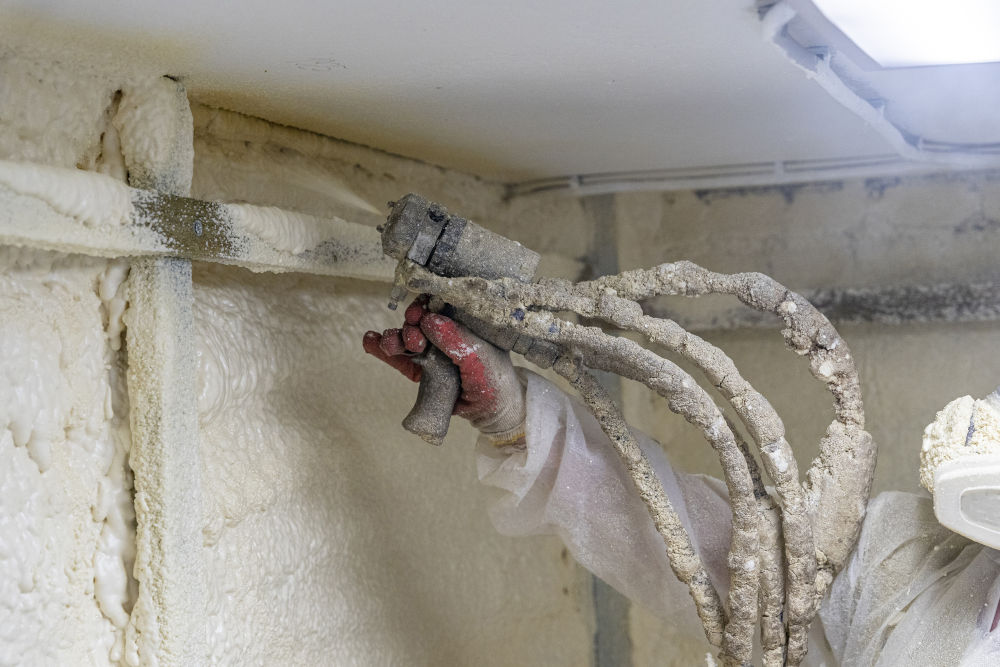

Many contractors are faced with the realization that they need to make spray foam system upgrades in order to scale. Before jumping into big upgrades or system replacements, start with smaller practical upgrades like blanket heaters or Espar diesel heaters for improved temperature control and new spray guns. Larger upgrades like new Core E1 transfer pumps and larger proportioners should be reserved for contractors who have outgrown their existing system and need immediate improvements in output.
Finally, don’t overlook jobsite and workflow optimizations. These can often make the biggest impact in efficiency and dramatically improve output for small, growing contractors.
Key Takeaways
- Always diagnose your bottleneck before scaling.
- Spray foam equipment scalability should focus on improving material stability.
- Only look toward advanced control platforms when volume justifies it.
- Don’t forget to optimize your jobsite layout to improve efficiency.
What to Upgrade: Now vs Later
| Bottleneck | Likely Spray Foam System Upgrades | What It Solves | When It Pays Off |
|---|---|---|---|
| Heat stability / cold weather performance | Blanket heaters + diesel heater for rig | Conditions material before spraying; reduces off-ratio foam | Immediately in cold climates or winter months |
| Monitoring & control | Graco Core E1 upgrade. | Enables Katalyst. Software designed to eliminate some of the largest causes of off ratio spraying | When off ratio errors occur frequently |
| Gun downtime & reliability | Spare gun (, not for dual-gun use) | Eliminates costly downtime when a gun goes down on the job | Immediately — low cost relative to a lost day of work |
| Gun performance & efficiency | Newer model spray gun (e.g. Fusion AP → Fusion FX upgrade) | Improves handling with a lighter, better-balanced design and easier maintenance/repair. | When gun maintenance or performance is slowing the crew down |
| Rig layout & workflow | Reorganized hose storage, service access | Cuts labor drag, speeds startup/shutdown, reduces crew wait time | Almost immediately — no capital expenditure required |
| Vertical & high-rise jobs | Portable cart system | Allows access to high-rise and multi-story jobs without full rig setup | When high-rise work becomes a consistent part of your job mix |
| Service expansion — fireproofing | Fireproofing machine | Opens a new revenue stream | When you have enough fireproofing demand to justify a dedicated machine |
| Service expansion — waterproofing | Dedicated waterproofing machine | Adds waterproofing as a service line | When waterproofing jobs are consistent enough to support the investment |
Start by Identifying the Bottleneck
Before you make upgrades for spray foam equipment scalability, you need to know where your system struggles the most. Some common problem points for contractors include output, temperature loss, inconsistent or imbalanced temperatures, and a lack of adequate power. Some contractors’ issues are more about the team’s workflow than it is the equipment itself.
The signs of an equipment bottleneck can be inconsistent or poor quality foam, long start-up times, and massive differences in pressure while spraying. Workflow bottlenecks often appear as contractors waiting on the machine.
Questions to Ask Before Buying New Equipment
If you’re unsure how to diagnose your bottleneck, ask yourself the following questions to help pinpoint the issue:
- What is your longest hose run?
- What is your average daily material volume?
- When does downtime happen most often?
- Are you losing yield, consistency, or labor time?
- Do job conditions change dramatically by season?
The Upgrades That Usually Pay Off First
While there’s not a one-size-fits-all answer for spray foam system upgrades, certain spray foam system upgrades provide more benefit than others. Generally, if you’re interested in scaling, you want to keep spray foam hose length considerations in mind. Try to focus on investing in better heated hoses, material conditioning support, transfer/feed pump setups, temperature/pressure monitoring, and layout improvements.
Maintenance can be a great way to achieve spray foam rig optimization, too. Many times, simply doing proper maintenance on your equipment can help keep you spraying and reduce bottlenecks..
When a Core E1 Upgrade Makes Sense
Larger scalability improvements, like new transfer pumps, make sense when your equipment’s functionality is being maxed out. A Core E1 upgrade, paired with a compatible Reactor 3 proportioner, can give a spray foam tech much more control during high-volume jobs. Better ratio control and smart supply functions allow you to monitor and adjust the pressure while Graco's Katalyst software, which works seamlessly with Core pumps, helps nearly eliminate two of the largest causes of off-ratio spraying: Air in the fluid stream and improperly feeding the Reactor with material.
Signals You Have Outgrown Your Current Control Platform
It can be tough to know when your team is ready for spray foam rig optimization. But there are a few key signs that most contractors encounter:
- Frequently having to correct ratio problems
- Lots of manual adjustment
- Inconsistent spray foam results with changing seasons
- Jobs are becoming too complex for current equipment
- Downtime is becoming increasingly costly
Add-Ons You Can Usually Postpone at Startup
When considering spray foam equipment scalability, many contractors turn to “bells and whistles” type upgrades, hoping that they’ll improve performance. But many times, these don’t solve the true bottleneck. Things like dual spray guns may seem practical, but only if the crew size, power supply, and job size can support it. Plus, they require specialized machines such as the PMC Premier Mach 2. Advanced reporting can seem flashy and technical, but it doesn’t always translate to a higher ROI. These types of advanced upgrades are better for larger companies that need to fine-tune their output.
Spray Foam Rig Optimization for Long-Term Growth
Realistically, one of the best ways to achieve spray foam rig optimization is with workflow improvements. Many contractors work inefficiently, and this can be one of the most overlooked bottlenecks.
If you care about long-term growth, start with your crew’s process first. Analyze your layout and find places to improve speed. Hose storage and service access should all be designed to reduce labor drag. When it comes to the spraying itself, create standard documentation when you find specific settings that work for your typical jobsite.
Upgrade vs. Replace: A Simple ROI Framework
You might be wondering whether it’s better to upgrade individual components or just invest in a new system entirely. By comparing ROI use cases, you can make a clear determination for your team.
If new equipment will prevent reworks and significantly improve downtime, it might be worth replacing. Doing so can also improve your yield and reduce your maintenance costs. Financing can reduce the upfront cost as well, allowing you to spread payments over time.
If the math just doesn’t add up and you don’t have a solid ROI after a few short years, it’s likely better to invest in spray foam system upgrades. This will improve the efficiency and revenue of your current jobs, without needing to make a large capital expenditure.
Why Contractors Use Bolair as a System Advisor
Planning the right combination of spray foam machines, hoses, pumps, and accessories can be challenging. Bolair specializes in helping Canadian contractors maximize their spray foam equipment scalability. Our experts will listen to your growth plans and recommend solutions that fit your budget and team size, while also maximizing your ROI.
Request a consultation today to discuss system sizing, spray foam rig optimization, or equipment features. We can also provide you with a quote on any of our spray foam system upgrades.
Frequently Asked Questions
When should I upgrade a spray foam system?
Upgrade when output, temperature stability, or consistency holds back job volume, causes frequent rework, or creates long start-up times. Focus on upgrades that remove clear bottlenecks instead of replacing the whole rig too early.
What usually causes performance limits first?
The first limits usually come from hose heat loss, inconsistent temperatures, or undersized feed systems. These show up as poor spray quality, inconsistent foam, and big pressure swings on the spray foam machine.
When is a Core E1 upgrade worth it?
If you are experiencing off-ratio spraying, or want advanced features the Core E1 setup is worth it. Quieter and less expensive to operate than traditional pneumatic pumps, the electric pumps can communicate with the Reactor 3 to give you a fully-connected system.
Should I upgrade components before replacing the machine?
Yes, if a specific component is the real bottleneck, upgrading that part often costs less and improves ROI faster than replacing the whole machine. Replace only when maintenance and targeted upgrades no longer keep up with your job mix.
What upgrades improve ROI the fastest?
The fastest ROI usually comes from better heated hoses, electric transfer pumps like Core E1 and better material conditioning such as drum blanket heaters and an Espar diesel heater.These reduce downtime and improve yield without a full machine replacement.
Please complete your information below to login.
Sign In
Create New Account